How I Finally Said Goodbye to Plastic Wrap That Sticks to Everything… Except What It Should Cover
The simple discovery that transformed my kitchen — and saves me 10 minutes of stress every evening
How I Finally Said Goodbye to Plastic Wrap That Sticks to Everything… Except What It Should Cover
The simple discovery that transformed my kitchen — and saves me 10 minutes of stress every evening

It was a Tuesday evening like any other.
I came home exhausted from work, the kids were yelling in the living room, and I had just finished cooking a gratin and a salad for the next day. All that was left was to put the dishes in the fridge.
Simple. Logical. Two minutes, max.
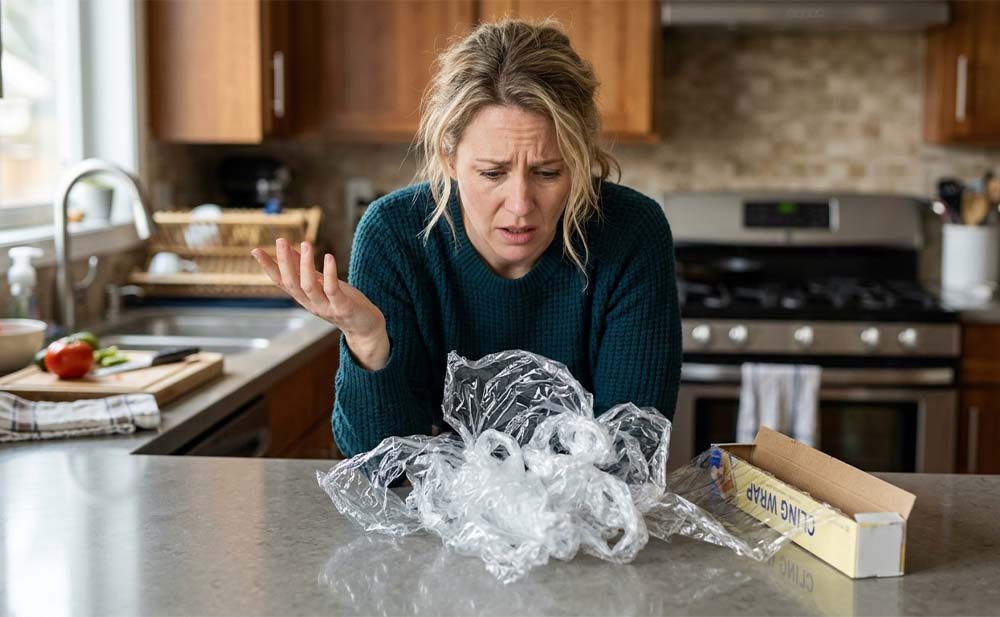
Except here's the thing: I opened the drawer to grab the plastic wrap… and the usual nightmare began.
The wrap peeled off the roll in a spiral, sticking to itself in a useless, crumpled mess. I pulled too hard, it tore. I started again. This time, it stuck to my fingers. Then to my wrist. Then to itself, again.
Five minutes later, I was standing there, the gratin still on the counter, a useless wad of plastic in my hand, and a quiet anger rising from my gut.
Do you know that feeling?
The little everyday trap that no one talks about
It's not the end of the world, of course. But that's precisely the problem: it's too small to really complain about, yet too frequent to ignore.
Psychologists and home organization experts call it cognitive friction — those micro-irritations that, added up, drain our mental energy far more than we realize.
In the kitchen, this friction takes several forms you'll surely recognize:
❌ Plastic wrap that sticks to itself, tears crookedly, or leaves gaps through which air (and odors) seep in
❌ Tupperware lids you can never find the exact match for, because one is lost behind the oven and another slightly melted in the dishwasher
❌ Yesterday's salad bowl you find in the fridge, covered with a precariously balanced upside-down plate… and half dried out
❌ Family picnics where flies land on the dishes before everyone is even served
Each of these moments, taken alone, is trivial. But together, every evening, week after week?
That's stolen time. Wasted energy. And a silent level of stress that accumulates.

The conversation that changed everything
It was my neighbor Sandrine who first told me about it, during an impromptu coffee one Saturday morning.
"You know those little transparent elastic covers?" she asked, showing me her phone. "I ordered some three weeks ago. Marie, I didn't know covering a bowl could be that satisfying."
I laughed. Honestly, I thought it was one of those kitchen gadgets you buy on a whim and find at the back of a cupboard six months later.
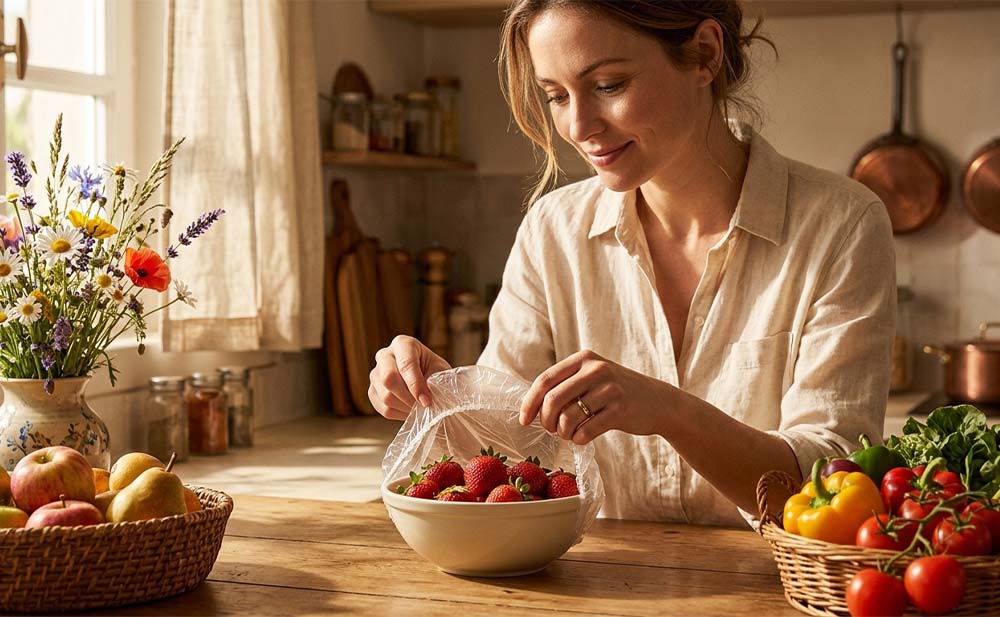
But Sandrine insisted. She pulled one of those little transparent covers out of her drawer and demonstrated on the bowl of fruit I had brought.
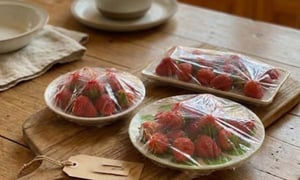
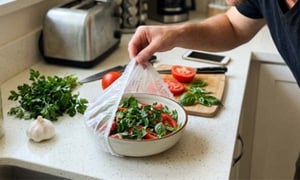
In two seconds — literally two seconds — the bowl was perfectly covered. The elastic edge had molded to the shape of the container by slipping under the rim. No gaps. No complicated handling. No sticky wrap.
"And see? Transparent. I can see what's inside without disturbing anything."
I ordered a pack that very evening.
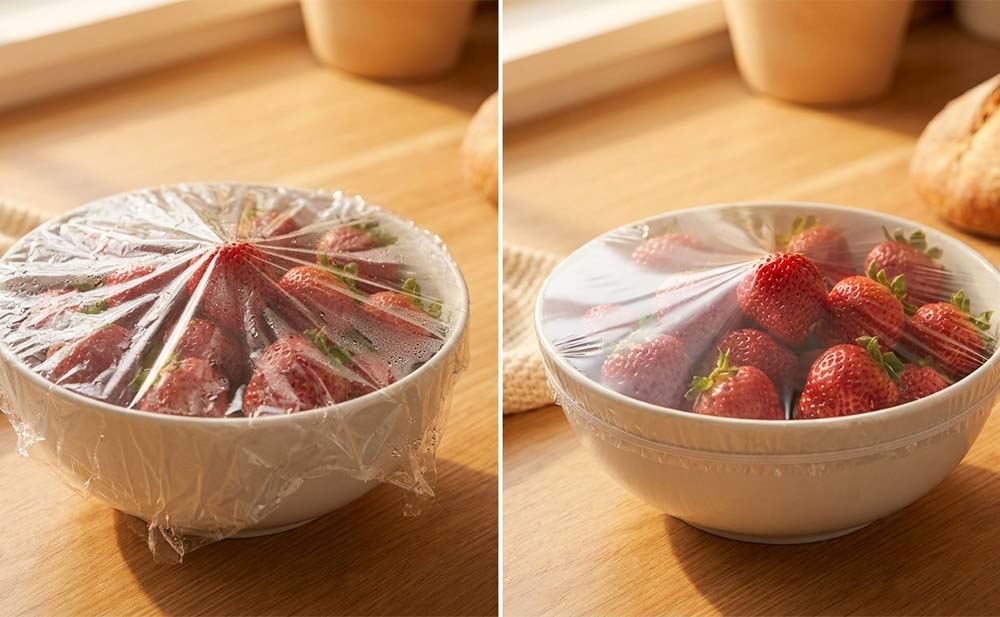
Why plastic wrap is doomed to disappoint you — every single time
Here's something plastic wrap manufacturers will never tell you.
Their product relies on a fundamentally fragile physical principle: static electricity.
For plastic wrap to adhere properly, it needs two ideal conditions: a perfectly dry surface and perfectly uniform tension. But in a real kitchen? Bowl edges almost always have a bit of moisture, a drop of sauce, or simply the natural condensation from warm food.
Result: the static charge cancels out upon contact with that imperfection. The wrap lifts, peels off, and your seal is compromised. You aren't failing to wrap your leftovers — you're being betrayed by a technology designed for lab conditions, not for a real kitchen.
Rigid Tupperware lids, on the other hand, fall into another trap: the geometry trap. If the lid doesn't exactly match the bowl's diameter — to the millimeter — it's useless. And in our real cupboards, with dozens of bowls and containers of all shapes, finding the right lid in under thirty seconds is a feat.
So a radically different solution was needed.
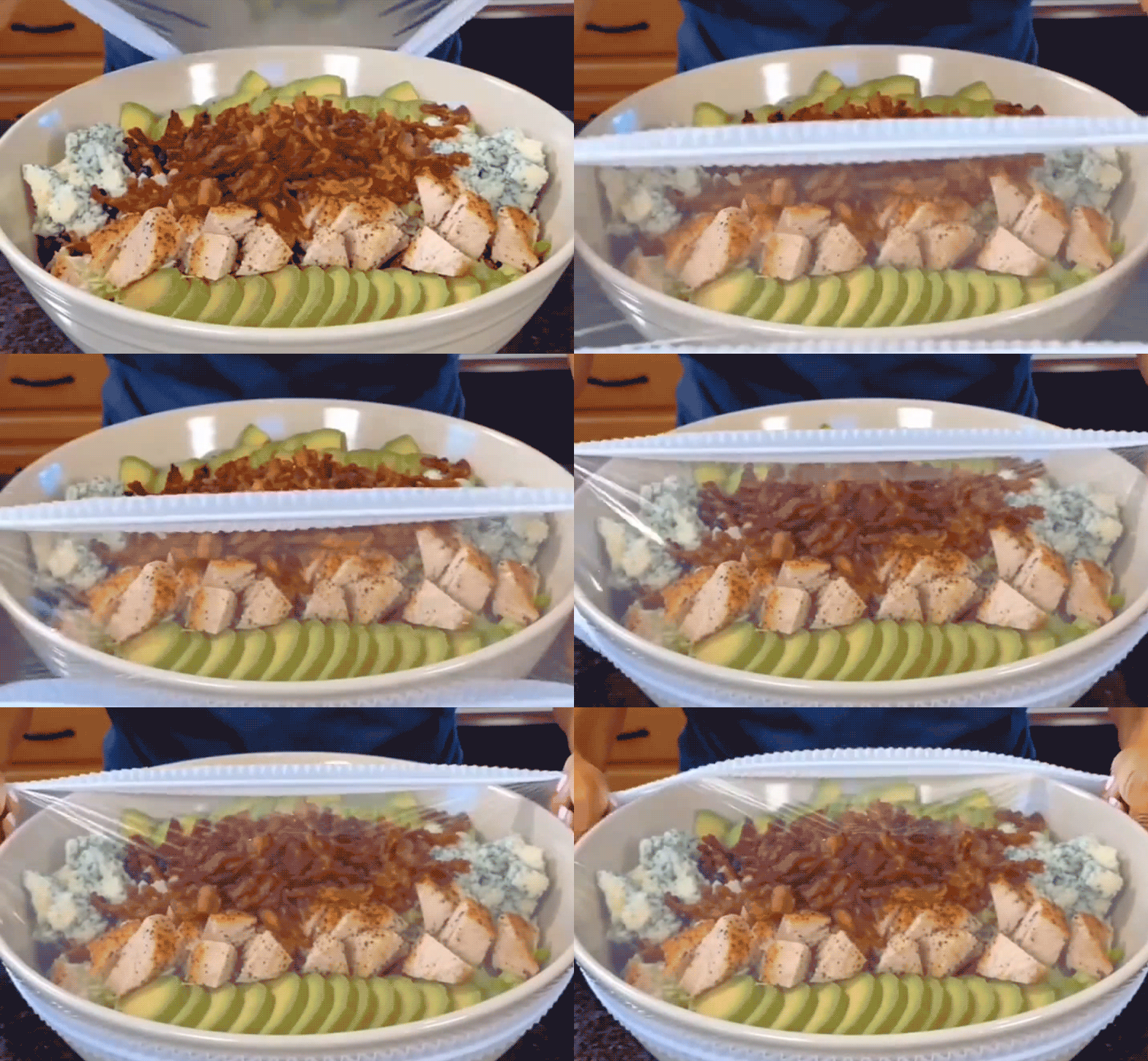
The technology that abandons static electricity for mechanical physics
These are the Disposable Food Storage Covers — and their operating principle is unassailable in its logic.
Instead of relying on static electricity (fragile, conditional), they use what I call the Flexi-Grip Adaptive 360° System: a high-resistance elastic hem sewn all around a flexible transparent HDPE/LDPE film.
The logic in three simple sentences:
Traditional plastic wrap uses weak static electricity, which fails at the slightest contact with a drop of moisture on the bowl's edge. These covers use an elastic band that physically slips under the rim of the container, like a shower cap. Because they work by mechanical grip — not electrical charge — they create an instant, airtight, insect-proof seal on any shape, whether dry or wet, in exactly 2 seconds.
It's the same logic as a sturdy rubber band versus a piece of poorly stuck tape. One holds. The other doesn't.
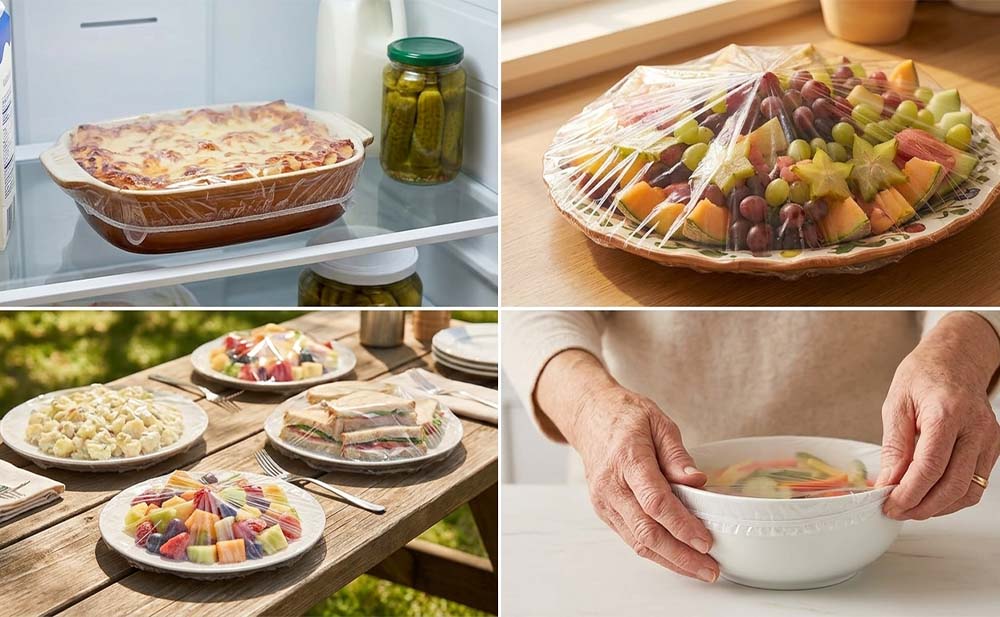
What this actually changes in daily life
Since I started using these little covers, something subtle but real has changed in my evenings.
Putting the kitchen away after dinner went from a "stressful chore" to an "automatic 90-second task."
Here's why:
✅ They adapt to everything. Soup bowl, flat plate of leftovers, half-melon, juice pitcher, oval dish — the elastic edge stretches up to 28 cm in diameter and conforms to any shape. No need to search for the right lid.
✅ The fridge finally becomes readable. The transparent film lets you see at a glance what each dish contains — without disturbing anything, without opening anything. No more "mystery green container" at the back of the fridge.
✅ They hold up outdoors. For picnics, barbecues, and terrace meals, the elastic seal resists the wind and keeps insects at bay. No risk of the cover flying off mid-meal.
✅ It's done in 2 seconds, without thinking. Stretch, place, let the edge slip under the rim. That's it. No cutting, no tearing, no technique.
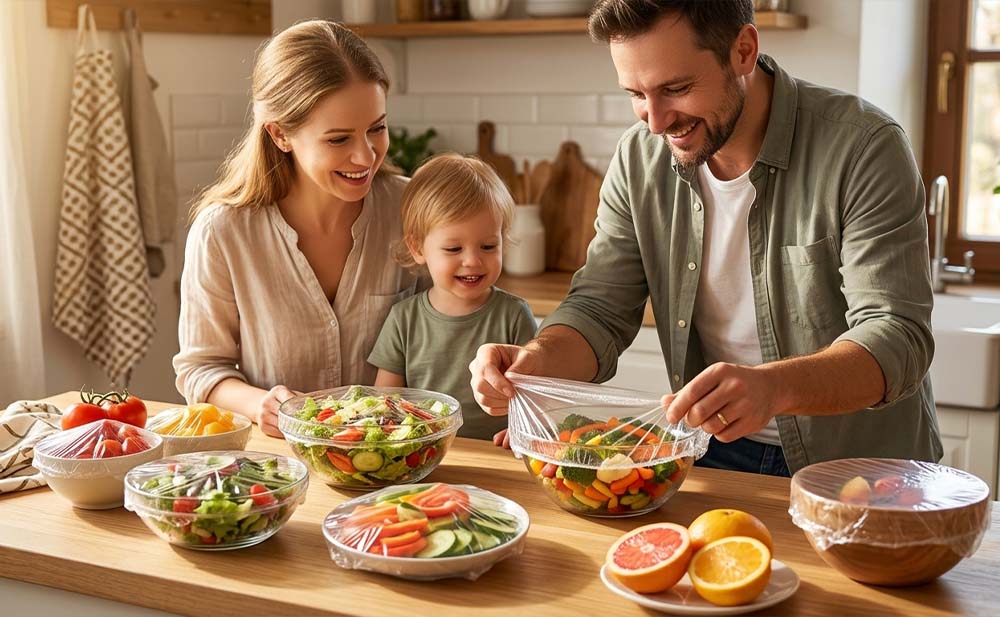
The conclusion that speaks for itself
Here's what I discovered: an infinitesimal gesture, barely noticeable, can subtract a small friction every day. Not a revolution, no, but a removal. That of that silent, repetitive struggle whose weight we only measure once it disappears.
By removing those few seconds of daily annoyance, I gained back far more than time: I gained a breath. A brief moment of fluidity, every evening. Over a week, that's whole minutes of spared tension. Over a year, hours of that dull energy we think we have to spend, and that we can simply keep.
It's not a magic object. It's an honest tool, that does what it was designed to do: adapt to anything, in one gesture, without resistance. And in the tumult of daily life, that small silent victory is worth all the gold in the world.
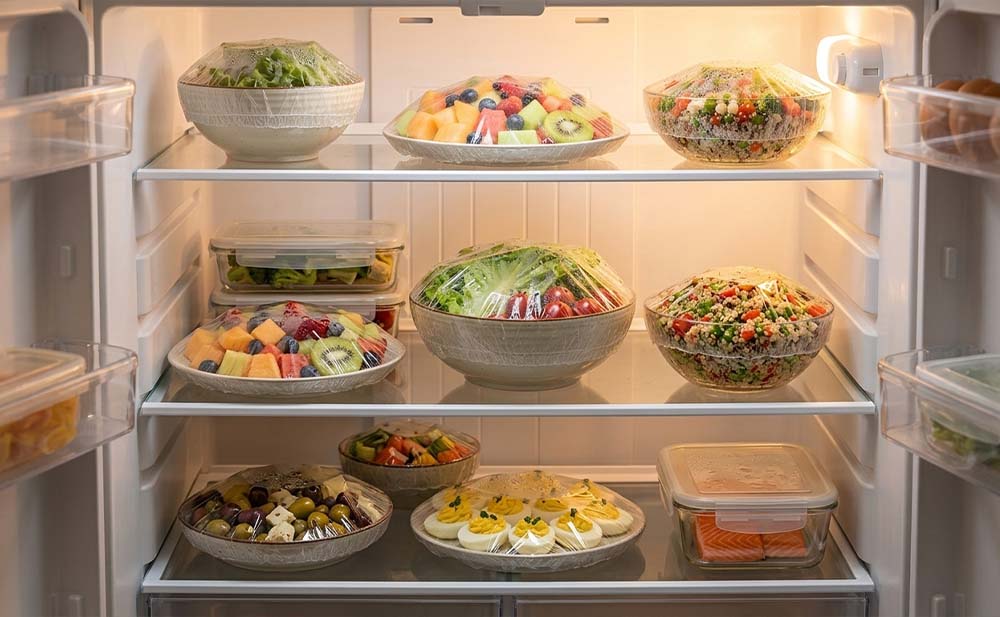
The comparison that says it all
Disposable Elastic Covers
| ✅ Yes, without thinking |
| ✅ Even on wet edges |
| ✅ Always |
| ✅ 100% transparent |
| ✅ Sturdy mechanical seal |
| ✅ One universal size |
| ✅ No effort required |
Plastic Wrap / Tupperware
| ❌ Exact match required |
| ❌ Fails as soon as there's moisture |
| ❌ Sticks, tears, start over |
| ❌ Impossible with rigid containers |
| ❌ Easily blows away |
| ❌ Chaotic drawer of mismatched lids |
| ❌ Pull and force |
It's not just me...
Thousands of satisfied users confirm it — these disposable food covers adapt to all your dishes, keep your food fresh, and simplify your daily life, whether in the kitchen, on a picnic, or camping.
Honestly, I ordered out of curiosity, and now I don't know how I managed before. My fridge is finally clean and organized — I can see everything at a glance without touching anything. And in the evening after dinner, bam, leftovers are covered in two seconds. Revolutionary for something so simple.


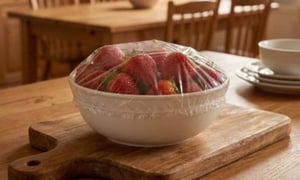



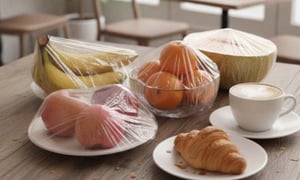



We offer a 100% satisfaction guarantee.
We stand behind this promise because we spent months perfecting every detail — from the stretchable rim that perfectly conforms to all your dishes, to the HDPE material that seals in air and keeps your food fresh 3 times longer, BPA-free and waste-free.


Frequently Asked Questions
Q: Do these covers fit all bowls?
Yes. The elastic edge stretches to fit all containers up to 28 cm in diameter — round, oval, square, or irregular.
Q: Are they food-safe and non-toxic?
Absolutely. Made from HDPE/LDPE, the same materials used for certified food packaging. Transparent and BPA-free.
Q: Can they be used outdoors, even with wind?
Yes. The elastic seal physically slips under the rim of the container, allowing it to hold even against a light breeze. Ideal for picnics and barbecues.
Q: Are they suitable for the freezer and microwave?
Yes. They withstand both low temperatures and moderate heat. You can use them to store dishes in the freezer or reheat food in the microwave (without direct contact with overheated fatty or sugary foods).